In the competitive landscape of book publishing, ensuring quality through effective Book Printing Inspection has never been more critical. According to a recent industry report, up to 30% of printed materials may show defects that can significantly affect the reading experience. Expert Paul Bennett, a veteran in printing quality assurance, emphasizes that "the smallest oversight in inspection can lead to major setbacks in production and customer satisfaction."
Quality assurance is a vital step in book printing. Even minor flaws can undermine the integrity of a publication. Inconsistent colors, misaligned texts, and poor binding can tarnish an author’s reputation. As our industry grows, so does the demand for meticulous inspection. Publishers must acknowledge the importance of these checks in their workflow.
The shift towards digital printing does not eliminate the need for rigorous Book Printing Inspection. On the contrary, it highlights a need for enhanced vigilance. As production speeds increase, potential errors can escalate. The reflection on current practices in inspection is not just necessary; it’s imperative for maintaining quality standards in the ever-evolving book market.
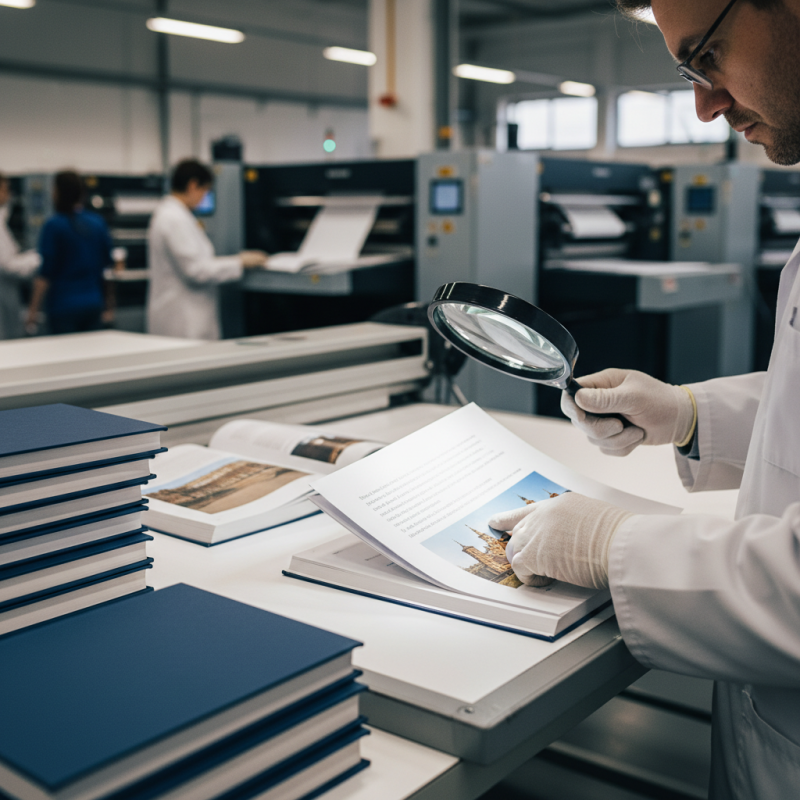
In the world of book printing, inspection plays a critical role. A study found that 30% of printed books have defects. These errors can range from color inconsistencies to misaligned text. Such issues diminish the overall quality and can lead to significant financial losses for publishers. Ensuring that books meet quality standards requires a meticulous inspection process.
Quality assurance not only enhances customer satisfaction but also protects a publisher’s reputation. The Book Industry Study Group reported that 55% of readers are sensitive to print quality. A single typo or smudged page can deter them from purchasing similar titles. Visual elements, like cover finishes, should also adhere to specific standards to appeal to buyers.
Regular audits and rigorous tests help identify potential problems early. It’s essential to set clear benchmarks for quality, yet this doesn’t always happen. Some printing companies overlook detailed reports. An alarming 40% of print runs fail to meet expected quality checks. Addressing these flaws early can save time and resources down the road. Quality inspection is not just a checkbox; it’s a vital step in the printing process that must not be ignored.
| Tip Number | Inspection Tip | Purpose | Frequency |
|---|---|---|---|
| 1 | Verify Color Accuracy | Ensure colors match the design specifications | Every Print Run |
| 2 | Check for Consistency in Print Quality | Identify any variations in print outputs | Every 100 Copies |
| 3 | Inspect Binding Quality | Ensure durability and aesthetics of binding | Every Print Run |
| 4 | Review Page Alignment | Ensure pages are correctly aligned | Every Print Run |
| 5 | Check Paper Quality | Verify that the right paper grade is used | Every Print Run |
| 6 | Inspect for Print Defects | Identify issues like smudges or misprints | Every 100 Copies |
| 7 | Assess Trim Sizes | Ensure sizes match specifications | Every Print Run |
| 8 | Review Packaging Quality | Ensure packaging protects books during transport | Every Print Run |
| 9 | Check ISBN Placement | Verify proper placement of ISBN codes | Every Print Run |
| 10 | Conduct Final Quality Check | Perform a final check before shipment | Every Print Run |
When it comes to effective book printing inspections, having the right equipment is essential. A quality magnifier allows inspectors to examine fine details like text clarity and color accuracy. Without this, small errors may go unnoticed. Additionally, a color calibration tool ensures that the printed colors match desired specifications. Many overlook this tool, believing the printers will do it automatically.
Another vital piece of equipment is a light box. This helps in checking the overall color consistency across pages. Inspectors can spot variations that could affect the final product. A digital caliper can measure thickness and dimensions precisely. This is crucial for ensuring the book meets industry standards. Some may skip this step, assuming printers will handle it correctly.
Print samples should be reviewed under different lighting conditions. This helps catch discrepancies that may arise in varied environments. Investing in adequate training for staff on using this equipment is crucial. Without proper training, even the best tools can be misused. Each piece of equipment plays a part in achieving quality assurance. Overlooking any could lead to imperfection in the final product.
When inspecting book printing, attention to detail is crucial. The color accuracy is one of the primary aspects. A report by the Printing Industries of America notes that up to 40% of print jobs suffer from color mismatch. Evaluating color consistency can save resources in the long run. Look closely at proof prints and compare them with digital proofs for discrepancies.
Another important element is paper quality. The difference between a glossy finish and a matte one can significantly impact the book's appeal. According to a survey by Book Manufacturers' Institute, 70% of readers prefer high-quality paper. Testing the feel and weight of the paper should be on your checklist. Inspect for durability and ensure it meets the expected standards.
Binding integrity also deserves attention. Weak bindings can lead to pages falling out, impacting the reader's experience. The Quality Assurance Report highlights that 15% of print runs face binder failures. Check for consistent glue application and test the binding strain. Look for any uneven edges or loose pages. These details can make all the difference in presenting a polished final product.
This chart represents the evaluation aspects during the book printing inspection process. Each aspect is rated on a scale of 1 to 10 based on its importance for ensuring quality assurance.
When inspecting printed books, it's crucial to identify common printing defects that can affect quality. A frequent issue is misalignment. This occurs when text or images do not line up correctly on the page. Misaligned prints can ruin the overall aesthetic. Check the binding carefully, too. If pages are unevenly aligned, it can lead to an unsightly appearance.
Another common defect is color inconsistency. Variations in color can arise from improper calibration of printers. Look for patches where the color appears lighter or darker than intended. This could indicate a need for better ink management. Also, consider the paper quality. Low-quality paper often absorbs ink poorly, leading to smudging. Check for any visible marks or blurred images.
Don’t overlook the importance of page numbering. Missing or incorrect page numbers can confuse readers. This error often goes unnoticed during initial checks. Take the time to verify every page. Each small defect contributes to an unsatisfactory reading experience. A vigilant inspection process can help catch these flaws early on.
In the book printing industry, documenting inspection results is crucial for maintaining quality standards. According to a recent study, over 30% of production issues stem from inadequate documentation practices. This highlights the importance of having a solid system in place to track each step of the inspection process.
One effective tip is to utilize standardized forms for inspections. This ensures that each inspector captures the same critical data, minimizing the risk of missing details. For instance, recording paper weight can prevent significant issues down the line. Inspectors should also make notes on any anomalies encountered during the inspection. This could provide valuable insights into recurring problems.
Another approach is to implement digital tracking systems. These platforms can store inspection results in real time. They offer an efficient way to review historical data. Yet, reliance on technology can lead to complacency. Inspectors must be vigilant and verify the accuracy of the entries made. A balance between digital and manual checks can enhance reliability.
Virtually, documenting inspection results involves continuous improvement. Companies need to revisit their procedures regularly. Identifying flaws in the process is vital to preventing future errors. This reflection can lead to significant advancements in quality assurance practices.